XÂY DỰNG CHỈ SỐ QUẢN TRỊ QUỐC GIA TRONG THỜI KỲ SỐ HÓA, HƯỚNG TỚI TĂNG TRƯỞNG XANH VÀ PHÁT TRIỂN BỀN VỮNG, TẠI VIỆT NAM
DOI: https://doi.org/10.58902/nckhpt.e-v1i1.323


1. Introduction
Measuring and evaluating the effectiveness of national governance is an indispensable requirement for effective governance. Establishing and using a system to measure and evaluate the effectiveness of activities helps the country understand and further control its activities effectively, achieving the set goals. The evaluation and monitoring system is shown by specific indicators to evaluate the quality of activities and results achieved in the present and the future. The system is an important support tool for administrators in determining the causes and effectiveness of operations during the governance process. Performance evaluation is the focus of an effective governance system according to the goals and is shown by specific indicators. Through these indicators, organizations and individuals will recognize and evaluate the effectiveness of governance activities based on ranking in order.
However, there is no common set of national governance indicators in the world. The World Bank's Worldwide Governance Indicators (WGI) and the Chandler Good Government Index (CGGI), which evaluate governments based on their capacity and effectiveness, are two relatively popular sets of indicators. India has the Good Governance Index (GGI), which provides a comprehensive and workable framework to assess the state of governance across states and union territories (UTs), allowing for ranking of states/districts. The GGI creates a tool that can be used consistently across states to assess the impact of various interventions undertaken by the Central and State Governments, including the UTs. For example, the GGI Framework 2021 covers ten sectors (Government of India, 2021) and 58 indicators.
The application of the indexes to measure and evaluate governance efficiency is an objective requirement, carried out at the national level or at the administration level by industry, territory or field such as finance, administrative reform, business environment or national competitiveness capacity at the macro level or micro level such as the competitiveness index of enterprises/ products... In the context of international competition and the impact of science and technology in the fourth industrial revolution (4.0) such as artificial intelligence (AI), digital economy, internet of things (IoT), the goal of improving labor productivity, quality of life and improving the quality of effective and efficient national governance.
In the context of Vietnam's policy of promoting digital transformation and development in the digital age, the research on "Building a set of national governance indexes in the digital age towards green growth and sustainable development under the impacts of the fourth industrial revolution (4.0) in Vietnam" has urgent theoretical and practical significance, contributing to clarifying the model of effective and modern national governance with sets of indexes reflecting the results of national governance activities in the process of building a digital government, a digital nation, and improving national competitiveness.
This research paper consists of four parts: (1) Perception of digital society model and its impacts. (2) Digital transformation in circular economy and green growth towards sustainable development. (3) Understanding of national governance in digital transformation. (4) Overview of Vietnam rankings according to several world indexes and recommendations.
2. Research overview
This research paper provides an overview of national governance in the digital age and its relationship with green growth and sustainable development, particularly in the context of Vietnam under the impacts of the Fourth Industrial Revolution (4.0). Theoretical foundations are built upon global governance frameworks such as the Worldwide Governance Indicators (WGI), Chandler Good Government Index (CGGI), and India’s Good Governance Index (GGI), which evaluate government capacity, effectiveness, and governance quality. Simultaneously, concepts of digital society, digital government, and digital economy are reviewed through national policies such as Decision No. 749/QD-TTg (National Digital Transformation Program) and Decision No. 411/QD-TTg (National Strategy for Digital Economy and Digital Society Development).
The study also synthesizes existing theoretical perspectives on circular economy, green economy, and green growth from international organizations such as UNEP, OECD, and UNESCAP. It identifies gaps in research regarding a unified national governance index tailored to Vietnam’s socio-political context in the digital transformation era. Additionally, previous studies on national competitiveness, innovation capacity, digital transformation, and sustainable development serve as key references to propose Vietnam’s National Governance Index (VNGI 4.0).
3. Research methods
This study applies a qualitative research approach combined with policy analysis and systematic methods. First, it employs documentary research to collect and analyze primary sources such as Party resolutions, government strategies, national decisions, and international reports on digital transformation, governance indexes, circular economy, and green growth. Key documents include Decisions No. 749/QD-TTg, No. 411/QD-TTg, and No. 432/QD-TTg, and global indexes from WGI, CGGI, and GGI. Second, systematic analysis is applied to categorize and synthesize governance components into five main pillars: governmental role, business environment, innovation ecosystem, national position, and quality of life.
Finally, the study uses an analytical-synthetic method to propose the structure of the Vietnam National Governance Index (VNGI 4.0), ensuring it aligns with digital transformation trends, sustainable development goals, and green growth orientations. Data and rankings from global indexes (GII, LPI, EGDI, HDI, CGGI, etc.) are used to provide empirical evidence and support recommendations.
4. Research results
4.1. Perception of digital society model and its impacts
4.1.1. Key concepts
In order to understand the concept of digital society, it is necessary to understand the concepts of digital age or information age, technological society and digital transformation.
The digital age or information age can be understood as the period in history in which digital technology, the internet and connected devices become dominant, shaping the way people work, live and interact. This era began with the birth of the World Wide Web and flourished with the development of personal computers by companies such as Microsoft and Apple, making technology more accessible to the public.
Technological society is a concept introduced by Jacques Ellul in his book of the same name, first published in 1954: The Technological Society. According to Jacques Ellul, in a technological society, “technique is not just a machine, technology, or this or that process to achieve a goal”; “technique is the sum of methods formed in a rational and absolutely effective way (for a certain stage of development) in all fields of human activity”. Jacques Ellul believes that in a technological society, technology has a profound impact on contemporary society, reshaping the relationships between people and social norms…
Digital society can be defined as a society in which our interactions, identities and communities are increasingly mediated through digital platforms and data systems (Singapore Management University, 2025). In Decision No. 411/QD-TTg dated March 31, 2022, digital society is defined as a society that integrates digital technology naturally and by default into all aspects of life, people are connected, have the ability to interact and master digital skills to use digital services, thereby forming new relationships in the digital environment, digital habits and digital culture.
Digital transformation is the process of changing from traditional models to applying new technologies such as: Artificial Intelligence (AI); Big Data; Internet of Things (IoT), Cloud Computing, etc. to change the way of operation, leadership, working processes, and corporate culture. Digital technology or digital transformation is when we have digitized data, we must use 4.0 technologies such as AI, Big Data, IoT, etc. to analyze data, transform them, and create new value.
On June 3, 2020, the Prime Minister issued Decision No. 749/QD-TTg approving the "National Digital Transformation Program to 2025, with a vision to 2030". The three basic objectives of the Program are to develop a digital government, improve the efficiency and effectiveness of operations [governance and administration]; develop a digital economy, improve the competitiveness of the economy; develop a digital society, and narrow the digital gap.
In Decision No. 411/QD-TTg dated March 31, 2022, the Prime Minister approved the National Strategy for Digital Economy and Digital Society Development to 2025, with a vision to 2030. The Strategy defines digital economy as economic activities using digital technology and digital data as the main input factors, using the digital environment as the main operating space, using information and telecommunications technology to increase labor productivity, innovate business models and optimize the economic structure. Digital society is a society that integrates digital technology naturally and by default into all aspects of life, people are connected, have the ability to interact and master digital skills to use digital services, thereby forming new relationships in the digital environment, forming digital habits and culture. The basic characteristics of digital society include: digital citizens, digital connections and digital culture. Digital citizenship is characterized by digital identity, digital means, digital skills and digital accounts. Digital connectivity is characterized by people's network connectivity, including the proportion of people covered by optical fiber, mobile broadband and the proportion of Internet users. Digital culture is characterized by the level of online public service usage, the level of online digital service usage, the level of digital health services usage and digital education usage of people.
Under the impacts of the fourth industrial revolution, countries around the world are accelerating digital transformation and digital technology application. Digital technology has transformed almost every aspect of modern life. By definition, digital technology is electronic tools, devices, systems and resources that create, store or process data. Digital tools include social media, mobile phones, online games and multimedia. Digital technology brings many benefits to society such as: Social connection, increased communication speed, flexible remote working opportunities, learning opportunities, automation, diversification and increased information storage capacity, easy information editing, accurate copying, GPS and map services, transportation support, low cost, better response to entertainment needs, increased access to news, more convenient banking and financial transactions, smaller devices, and the ability to apply in war (Goodman, 2023).
4.1.2. The impacts of digital transformation in national governance
Impacts on government in national governance: The development of science and technology and its application to production and social life increases the risk of unemployment, development gap, rich-poor gap, and social conflicts in the Internet age, etc. posing numerous new challenges to life and security, social safety and people. Biological, social, and spiritual aspects pose new requirements. Following the flow of the fourth industrial revolution, artificial intelligence (AI) is increasingly being widely applied in all areas of social life. Regarding, competition for jobs, according to the World Economic Forum: From 2025, employers will divide work between humans and machines almost equally 50-50. Automation is faster than expected, replacing 85 million jobs. Technology will change tasks, jobs and skills by 2025. About 43% of businesses surveyed said they will reduce their workforce due to technology adoption, 34% plan to hire a new workforce due to technology integration.
Impacts on business: Key impacts include: (i) on customer expectations, (ii) on improved product and service quality, (iii) on collaborative innovation, and (iv) on forms of production and creativity. Besides, there will be increased pressure on immigration flows. Additionally, the most competitive businesses will focus on upgrading the skills of their workers. Regarding remote working, about 84% of employers are rapidly digitizing work processes, significantly expanding remote working. It is likely that 44% of the workforce will
move to remote working. However, 78% of employers expect several negative impacts on worker productivity, and many businesses are taking steps to help their employees gradually adapt to remote working.
Impacts on press and media: Automated news writing software that automatically writes financial news has been put into use by AP news agency since 2014 with a speed of up to 2,000 news per second and continues to be expanded to other fields. Additionally, AI technology automatically creates media content.
Impacts on security, safety and human security: Besides benifits, the digital transformation process also poses non-traditional security challenges, including human security (ASEAN & Government of the People’s Republic of China, 2002). Several challenges have emerged such as criminal organizations/individuals taking advantage of internet connections to commit crimes, for instance, cyber attacks, money laundering, cyber fraud, using AI to create nude clips and images to defame others....
4.2. Digital transformation in circular economy and green growth towards sustainable development
4.2.1. Understanding the nature of the circular economy
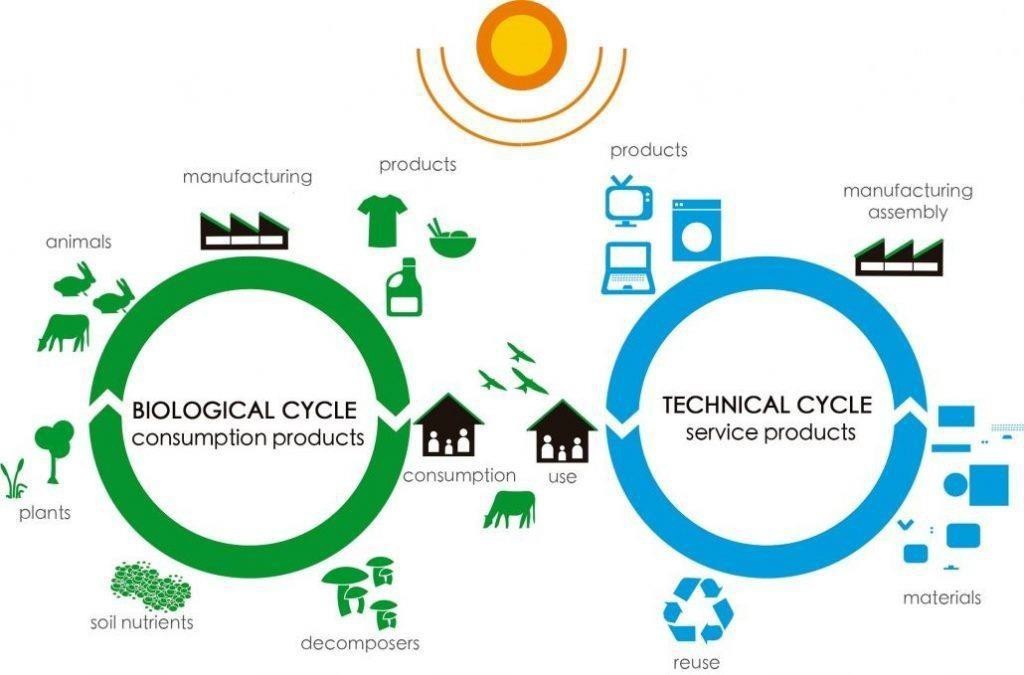
The circular economy is a concept that has evolved over decades to become a viable alternative to the current wasteful consumption system. It is gradually taking shape and being adopted, requiring little sacrifice from consumers or industry. This system will pioneer sustainable design, maintenance, repair, reuse, remanufacturing, refurbishment and recycling. As the world becomes increasingly aware of humanity’s impact on our planet, the new economic system shall not only address the finite nature of non-renewable resources, but also deal with the large amounts of waste that is generated.
In nature, the concept of waste does not exist, because everything is transformed, serving as raw materials for new cycles. The circular economy transforms the logic of production, consumption and disposal based on three principles: (i) Eliminate waste and pollution in the first place; (ii) Keep products and raw materials according to the cycle of use; (iii) Regenerate natural systems. The circular economy is an alternative to the mindset: take, make, consume, throw away.
Figure 1: Circular economy diagram.
Source: https://www.rts.com/blog/the- circular-economy-what-is- it-and-why-does-it-matter/
4.2.2. Understanding green economy
According to the UNEP, a green economy is “one that results in improved human well-being and social equity, while significantly reducing environmental risks and ecological scarcities” (UNEP, n.d.).
According to the OECD, a green economy in summary is a low carbon emission economy and the level of carbon emissions of economic activities can be measured. The sectors of green economy include agriculture, forestry, fisheries, tourism; construction industry, urban economy, transport, renewable energy research, processing, waste treatment, and water resources.
The goal of green growth: moving towards a low-carbon economy, enriching natural capital becomes
the main trend in sustainable economic development; gradually reducing emissions and increasing the ability to
absorb greenhouse gases become mandatory and important indicators in socio-economic development.
According to UNESAP (2005), green growth is an economic growth policy towards environmental sustainability (efficient use of resources, reduction of carbon emissions) and social equity. Green growth is a growth model towards a green economy. Green growth/green economy does not replace the concept of sustainable development.
The green growth and green economy model is a model that both promotes growth and ensures job creation and environmental sustainability; growth based on technological innovation, development of clean, environmentally friendly, low- emission technology; growth based on efficient use of natural resources; high social responsibility of businesses and communities towards the environment and ecosystem.
A green growth city is one that both grows and develops economically, while at the same time limiting negative impacts on the environment, reducing pressure on the use of resources and ecological services. The city achieves growth by greening current economic activities, developing green economic zones, creating jobs and making the city more attractive. This is also the path to sustainable urban development.
4.2.3. Vietnam's Policy and Action Plan
Decision No. 432/QD-TTg dated April 12, 2012 approving the Sustainable Development Strategy 2011- 2020 identified the orientation: "Converting the growth model to a harmonious development between breadth and depth; gradually implementing green growth, developing a low-carbon economy. Using all resources economically and effectively " Vietnam's Green Growth Strategy (Decision No. 1393, September 2012) sets out a policy framework towards developing a green economy in Vietnam. In which, focusing on three key tasks:
(i) Reducing the intensity of greenhouse gas emissions and promoting the use of clean energy and renewable energy; (ii) Greening production; (iii) Greening lifestyles and promoting sustainable consumption. In which, there is the task of "sustainable urbanization".
The Action Program to implement the Green Growth Strategy sets out 12 groups of activities with 66 actions, including the group on "Green and sustainable urban development".
Up to now, the Vietnamese Government has had many solutions to reduce and use resources through the issuance of documents guiding the implementation of the Law on Environmental Protection (Law No. 72/2020/QH14 of the National Assembly); Resolution No. 41-NQ/TW dated November 15, 2004 of the Politburo on environmental protection during the period of accelerating industrialization and modernization of the country; National Strategy on integrated solid waste management to 2025, with a vision to 2050 approved by the Prime Minister in Decision No. 491/QD-TTg dated May 7, 2018. In particular, the National Strategy on Green Growth for the 2021-2030 period, with a vision to 2050, also sets a target of over 90% of solid waste collected and treated, of which less than 30% is buried solid waste. Many good practice models have appeared in provinces and cities across the country such as Ho Chi Minh City, Hai Phong City, etc.; energy saving movements in Lam Dong province, Can Tho city, Dong Thap province, Bac Ninh province, etc.
In July 2019, in Antofagasta City, Chile, the APEC Energy Smart Communities Initiative (ESCI) awarded Best Practice Model Award - pillar division on low-carbon urban models - to the contest work on Construction Practices of Hai Phong to become a green port city proactively responding to climate change and rising sea levels (ESCI-KSP, 2019).
4.3. Understanding of national governance in digital transformation
4.3.1. Administration and governance
Administration is an activity that has been formed since the beginning of mankind, and is an important factor in determining the development of countries, organizations, and businesses, in which science and technology are the fundamental factors to achieve the set goals of an organization or country.
The concept of national governance was formed in the late 19th and early 20th centuries and this model continued to be discussed in the late 20th and early 21st centuries along with the process of promoting international integration in the context of the fourth industrial revolution in the world. Currently, there are many approaches with different connotations on national governance. However, studies on this topic remain limited. For Vietnam, it is a very new issue. However, existing studies confirm that the national governance model is the governance trend of the 21st century, helping countries soon become developed and prosperous.
Governance can be defined as: “the control and management of a country's resources through formal or informal institutions” (Vietnam Fatherland Front Magazine, n.d.). Then, the concept of good national governance with many criteria has been mentioned and applied by many countries to evaluate the effectiveness of national governance implementation annually.
According to UNDP “Governance refers to the exercise of political and administrative authority at all levels to manage a country’s affairs. It comprises the mechanisms, processes and institutions, through which citizens and groups articulate their interests, exercise their legal rights, meet their obligations and mediate their differences” (Son & Ha, 2021). It is believed that in essence, national governance is the process of making decisions and organizing the implementation of decisions to manage the country, solving political, economic and social problems in a country.
The dominant perception of national governance encompasses a wide range of political, administrative and economic relationships of the country. This perception is based on the public governance perspective with “the formation and development of policy regimes, creating a public space in which organizations inside and outside the public sector participate in deciding issues that affect the security and welfare of citizens” (State Organization Journal, 2014).
4.3.2. National governance in the context of digital transformation has many changes compared to the traditional model. Previously, governance was often associated with administrative orders and experience. However, in the digital age, decision-making is data-driven, not only based on knowledge and experience. In other words, decision making is supported by rich data sources, modern tools to research, collect and analyze big data, thereby improving the quality of policy decisions made, better meeting the requirements of society.
Leaders and public servants need to have the skills to "read data" to operate and handle work more quickly and effectively; "listen to society" better through real-time information systems; not only meet the requirements of practice, but also proactively forecast, shape and lead practice. This is even more relevant in the context of Vietnam's transformation of its growth model towards a vision by 2050 of building a green, circular economy in harmony with nature and creating a sustainable, prosperous life for the people, etc. The building of national governance indexes help Vietnam move in the right direction, improving national competitiveness, in line with the global green transformation trend and the United Nations sustainable development goals.
4.3.3. Difficulties and challenges of the building of Vietnam's national governance indexes:
First, insufficient awareness of the position, role and importance of applying internationally recognized National Governance Indicators in the process of assessing governance effectiveness in Vietnam.
Second, Vietnam's unified set of national governance indicators in line with international practices has not been applied to ensure the assessment of governance effectiveness of sectors, fields and localities in enhancing global competitiveness.
Third, the legal system regulating the application and standardization of indicators for evaluating national governance effectiveness in the direction of modernity, competition, and efficiency has not met requirements from all perspectives.
Forth, currently, there are six Ministries assigned by the Government to manage six sets of governance indices and many ministries, departments and branches participate in implementing a number of component indices of these internationally recognized national governance indices; functions and tasks have not been clearly defined to coordinate effective and unified management.
Fifth, current international cooperation is at the level of exchanging information, providing data and experience in collecting and processing information with international organizations managing national governance indexes to ensure more objective rankings. It has not attracted projects to research and build a unified Vietnamese national governance index that is consistent with the criteria of current international indexes for application.
4.3.4. Key factors
The key factors that are scientifically linked to measurement, reflecting the current situation, trends, and impacts on the effectiveness of national governance compared to other countries in international integration are: (i) The role and performance of the Government; (ii) The level of national productivity growth in the fourth industrial revolution is an important driving force to improve living standards in the long term such as institutions, infrastructure, application of modern ICT technology, etc.; (iii) The soft power of the country affirms the country's position in the international arena such as national credit rating, national brand, etc.; (iv) Business environment with innovation ecosystem such as innovation capacity, dynamism in business; (v) People's quality of life such as income, health, education, etc.
4.3.5. National governance principles that need to be considered:
Principle 1: National governance must be based on the rule of law, comply with the principles of publicity and transparency in the operations of public authorities, and ensure effective management of national resources, including public and private resources, towards enhancing the country's global competitiveness .
Principle 2: Ensuring the principle of equality with the participation of subjects in national governance (the State, enterprises and citizens).
Principle 3: National governance meets modern, competitive and effective requirements based on the application of modern ICT technology, developing into a digital and smart nation based on establishing a public, transparent, competitive, attractive and environmentally friendly business environment, especially with effective public - private cooperation mechanisms and policies, ensuring the improvement of national, enterprise and product competitiveness based on high technology and high-quality human resources.
Principle 4: Smart governance promotes the protection of human rights and accountability of the state apparatus. In particular, governance needs to tolerate cultural differences, making culture the goal, the regulator and the driver of growth and sustainable development.
Principle 5: National governance activities must be measured and evaluated for governance effectiveness at the national level or in fields, sectors or localities using internationally recognized indicators of modernity, competitiveness and efficiency in achieving the development goal of becoming a digital, smart, sustainable and prosperous nation. Smart national governance is based on modern ICT technology platforms such as AI, IoT, Big data, Blockchain... with smart institutions from central to local levels, providing high-quality online public services by digital government, smart government, smart community, smart growth, smart people living in a friendly, green environment and guaranteed by key resources such as knowledge economy, governance capacity, human capital.
4.3.6. Components of the National Governance Indexes in the fourth industrial revolution
Five main pillars basically reflecting the effectiveness and efficiency of national governance in the fourth industrial revolution are as follows:
Pillar 1: National institutions are the most important, decisive and fundamental factor to ensure the effective, efficient and highly competitive governance of a country.
Pillar 2: The role of the Government as the “conductor” of national governance.
Pillar 3: A favorable, attractive, lowest-cost, highly competitive business and investment environment with an innovative ecosystem is the foundation that determines national competitiveness, business and product competitiveness, and is also one of the important factors determining investment decisions of domestic and
international investors.
Pillar 4: The country's position and brand in the world are increasingly affirmed.
Pillar 5: The quality of life of the people is a goal that countries need to achieve and is often assessed through key factors such as: (i) Life expectancy; (ii) Education; (iii) Personal safety; (iv) Ecological environment; (v) Living standards - GDP; (vi) Gender equality; (vii) Discrimination; (viii) Satisfaction with public services.
5. Discussion
In the context of the Fourth Industrial Revolution, enhancing national governance capacity and improving international rankings have become a strategic priority for Vietnam. The National Governance Index version
4.0 (VNGI 4.0) is considered an important tool to measure, evaluate, and guide improvements in governance effectiveness nationwide, while standardizing domestic indicators according to international benchmarks. Implementing VNGI 4.0 not only contributes to strengthening competitiveness and international integration but also promotes innovation, efficient resource management, and sustainable development. Against this backdrop, the following sections will present the objectives of improving Vietnam’s international rankings and propose feasible solutions for deploying VNGI 4.0, aiming for modern, transparent, and effective governance.
5.1. The objective is to improve international rankings through improving Vietnam's GII index
Resolution No. 52-NQ/TW dated September 27, 2019 of the Politburo of the Communist Party of Vietnam defines the national development goal through improving the GII Index: “By 2030: Maintain GII ranking among the top 40 countries in the world”. Vietnam's goal by 2045 is “Vietnam becomes one of the leading centers ofmart production and services, startup and innovation centers in Asia; has high labor productivity, has the capacity to master and apply modern technology in all fields of economy - society, environment, national defense and security”.
Resolutions of the Party and Government all set the goal of improving the rankings in the WB, WEF, WIPO, UN rankings on the business environment, Vietnam's global competitiveness... to adapt to the new production in the fourth industrial revolution. Resolution No. 50-NQ/TW dated August 20, 2019 of the Politburo of the Communist Party of Vietnam on the orientation of further improving institutions and policies, improving the quality and efficiency of foreign investment cooperation by 2030: Vietnam's business environment and competitiveness will be in the ASEAN 3 group.
5.2. Proposing several feasible solutions to deploy and apply VNGI 4.0 Index and standardize domestic indexes of industries, fields and localities according to VNGI 4.0 Index
First, unifying the perception of applying the VNGI 4.0 Index is an important solution for Vietnam to develop into a digital, sustainable nation, in line with the development trend of countries in international integration, while at the same time perfecting the policy and legal framework to apply the VNGI 4.0 Index.
Second, improving the state management capacity from the central to local levels and the close coordination between ministries, branches and localities in implementing the VNGI 4.0 National Governance Index in a synchronous and effective manner; implementing Resolution No. 60-NQ/TW dated April 12, 2025 of the 11th meeting of the 13th Party Central Committee, Vietnam is entering a historic and unprecedented reform period - Organizing 2-level local government. This is not only a plan to organize the apparatus, but also a fundamental change, focusing on local governance, clearly demonstrating the desire for innovation, of the spirit of "dare to think, dare to do, dare to take responsibility for the benefit of the people and the development of the country". The goals are defined as: a more streamlined apparatus; faster and better services; clearer functions and authorities and more efficiency, effectiveness and efficiency.
Third, research on building a circular economic ecosystem model, green economy applying systems thinking science in the fourth industrial revolution. The goal is to exploit and use resources to create products and services for society based on the principles of the 6R model (Reduce - Reuse - Recycle - Refuse (outdated technology) - Rethink - Responsibility (social responsibility of the community and view products as services, change the mindset of product ownership to the mindset of use).
Forth, proactively research and propose the Vietnam National Governance Index - VNGI 4.0 to meet the requirements of "modernity, competitiveness and efficiency" with the principle of demonstrating Vietnam's global competitiveness, including power in reality and soft power as the central factor, reflecting the main characteristics of national governance with the roles and interests of three subjects in national governance (Government, enterprises and citizens). Ensure sustainable global competitiveness in accordance with the principles and national ranking indexes of current prestigious international organizations. The VNGI 4.0 Index includes 5 pillars (Chandler Institute of Governance Index, 2023), 23 groups of indexes, 144 component indexes.
6. Conclusion
The Fourth Industrial Revolution presents both unprecedented opportunities and significant challenges for national governance in Vietnam. This study has highlighted the importance of adopting internationally recognized governance frameworks to develop and apply a National Governance Index 4.0 (VNGI 4.0), to enhance transparency, efficiency, and accountability across all levels of government. Vietnam’s commitment to improving global rankings, particularly the GII, demonstrates a clear strategic vision of integrating innovation, digital transformation, and sustainable development into governance practices.
To achieve these objectives, the alignment of domestic governance indicators with internationally recognized standards, capacity building for public officials, and the application of modern technologies are essential. Furthermore, fostering citizen participation, strengthening inter-ministerial coordination, and promoting sustainable economic and environmental practices will ensure that governance is not only effective but also resilient and future- oriented.
In conclusion, Vietnam’s efforts to modernize its governance system in indicators represent a crucial step toward building a competitive, innovative, and sustainable nation. By continuously improving governance practices, Vietnam can enhance its international standing, better meet the needs of its citizens, and contribute effectively to regional and global development in the era of the Fourth Industrial Revolution.
ASEAN & Government of the People’s Republic of China. (2002). ASEAN–China joint declaration on cooperation in the field of non-traditional security issues.
Chandler Institute of Governance Index. (2023). Chandler Good Government Index 2023: Global findings report. Retrieved November 1, 2025 from https://chandlergovernmentindex.com/wp-content/uploads/2023-Chandler-Good-Government-Index-Report.pdf.
Communist Party of Viet Nam. (2004). Resolution No. 41-NQ/TW dated November 15, 2004 on Environmental Protection in the Period of Accelerating Industrialization and Modernization of the Country. Hanoi, Viet Nam.
Communist Party of Vietnam. (2019). Resolution No. 50-NQ/TW dated August 20, 2019 on the orientation of further improving institutions and policies, improving the quality and efficiency of foreign investment cooperation by 2030.
Communist Party of Vietnam. (2019). Resolution No. 52-NQ/TW dated September 27, 2019 on some guidelines and policies for proactively participating in the Fourth Industrial Revolution.
Energy Smart Community Initiative – Knowledge Sharing Platform (ESCI-KSP). (2019). 2019 The 4th ESCI Best Practices Awards Program. Retrieved November 1, 2025 from https://esci-ksp.org/Awards/Show/500003.
Goodman, P. (2023). 16 advantages of digital technology. Retrieved November 1, 2025 from https://turbofuture.com/computers/Advantages-of-Digital-Technology.
Government of India. (2021). Good Governance Index 2021 launched on Good Governance Day, December 25, 2021 by Union Minister of Home Affairs and Minister of Cooperation Shri Amit Shah. Retrieved November 2, 2025 from https://www.pib.gov.in/PressReleasePage.aspx?PRID=1785140®=3&lang=2#:~:text=The%20Good%20Governance%20Index%20(GGI)%202021%20was,public%20security%20*%20Environment%20*%20Citizen%2Dcentric%20governance
National Assembly of the Socialist Republic of Viet Nam. (2020). Law No. 72/2020/QH14 dated November 17, 2020 on Environmental Protection. Hanoi, Viet Nam.
Politburo. (2019). Resolution No. 50-NQ/TW dated August 20, 2019 on Orientations for Improving Institutions and Policies, and Enhancing the Quality and Effectiveness of Foreign Investment Cooperation to 2030. Hanoi, Viet Nam.
Politburo. (2019). Resolution No. 52-NQ/TW dated September 27, 2019 on a Number of Guidelines and Policies for Proactively Participating in the Fourth Industrial Revolution. Hanoi, Viet Nam.
Prime Minister of the Government. (2012). Decision No. 1393/QD-TTg dated September 25, 2012 approving the Sustainable Development Strategy of Viet Nam for the period 2011–2020. Hanoi, Viet Nam.
Prime Minister of the Government. (2012). Decision No. 432/QD-TTg dated April 12, 2012 approving the Sustainable Development Strategy of Viet Nam for the period 2011–2020. Hanoi, Viet Nam.
Prime Minister of the Government. (2018). Decision No. 491/QD-TTg dated May 7, 2018 approving the adjustment of the National Strategy on Integrated Solid Waste Management to 2025, with a vision to 2050. Hanoi, Viet Nam.
Prime Minister of the Government. (2020). Decision No. 749/QD-TTg dated June 3, 2020 on the National Digital Transformation Program to 2025, with a vision to 2030. Hanoi, Viet Nam.
Prime Minister of the Government. (2021). Decision No. 432/QD-TTg dated March 24, 2021 approving the Master Plan for Basic Investigation of Water Resources to 2030, with a vision to 2050. Hanoi, Viet Nam.
Prime Minister of the Government. (2022). Decision No. 411/QD-TTg dated March 31, 2022 approving the National Strategy for the Development of the Digital Economy and Digital Society to 2025, with a vision to 2030. Hanoi, Viet Nam.
Singapore Management University, Centre for Digital Law. (2025). Digital society. Research clusters. Retrieved November 5, 2025 from https://cdl.smu.edu.sg/research-clusters/digital-society.
Son, V. T., & Ha, V. V. (2021). National governance in the context of digital transformation. Vietnam Journal of Science and Technology, 5, 17-19.
State Organization Journal. (2014). Governance. Retrieved November 1, 2025 from https://tcnnld.vn/news/detail/6799/Quan-tri-Quoc-gia.html.
UN environment program. (n.d.). What is an "Inclusive Green Economy"?. Retrieved November 5, 2025 from https://www.unep.org/explore-topics/green-economy/why-does-green-economy-matter/what-inclusive-green-economy
United Nations Economic and Social Commission for Asia and the Pacific (UNESCAP). (2005). State of the environment in Asia and the Pacific 2005. Bangkok: United Nations.